


Furniture for the Hospitality Industry: Discovering Style No. 3: French Touch by GO IN
 InfoWeb Marketplace · Editorial team
Published on 16 July 2018 · 2 min read
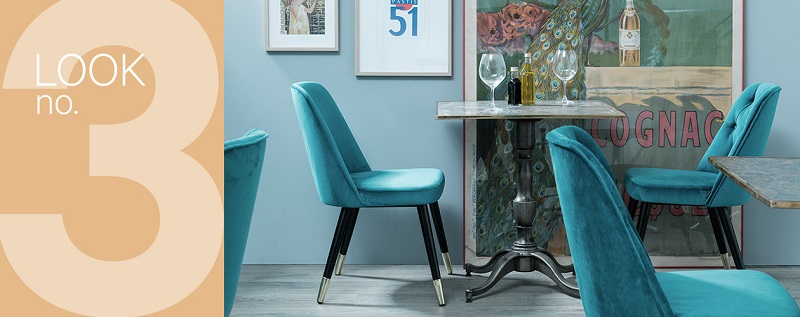
Designing a restaurant is not just a matter of placing furniture in a room and fitting it out with matching accessories. Interiors convey a concept, address one or more target groups, tell stories and, at best, evoke emotions. True to its motto ?many ways to be unique?, GO IN is creating a series of harmonious styles based on a wide range of furniture for professionals. Number 3: French Touch
Paul Bocuse, the chef of the century. Famous cafés and artists' restaurants. Architectural masterpieces such as the Eiffel Tower. Film legends such as Brigitte Bardot and elegant car bodies such as the Citroën DS. France has a lot to offer, including restaurant interiors in a style all its own.
Bistro and brasserie furniture is also making a splash here in Germany because it conveys something of the nonchalance and lifestyle of our French neighbors. Marble, brass, velvet and bronze are the typical ingredients of the French Touch style.
Upholstered armchairs, bistro chairs and marble tables with brass edging are combined with ornate wood paneling, floral-patterned tapestry, retro-style tiles, large mirrors and opulent lighting.
Simple pleasure
Unlike the refined restaurant, the word brasserie is synonymous with simple pleasure and traditional cuisine. This simple pleasure can also be found in a relaxed atmosphere at the ?Brasserie Champeaux? that the Michelin-starred chef Alain Ducasse opened in Paris. This brasserie is dominated by a rectilinear interior design with long banquettes, angular tables, understated chairs and exposed ducts on the ceiling.
The dishes and drinks of the day are presented on large black display boards, like those found in airports and train stations. But the brasserie cult is also celebrated in Germany.
The ?Brasserie Desbrosses? at the Ritz Carlton in Berlin literally breathes history because the furniture is an original from 1875. It was dismantled in 2003 in the town of Mâcon, in southern Burgundy, restored, supplemented with missing furniture and then found a new life at the Ritz Carlton on Potsdamer Platz. Floral-patterned tiles, hand-painted wall panels, mirrors and wood paneling now spread the French style.
When bistro style meets industrial style
Whether traditional or modern, simple or whimsical, the brasserie style has many interpretations. There are originals such as the ?Brasserie Lipp?, opened in 1880 in Paris.
This establishment is an institution on the Boulevard Saint-Germain, long frequented by figures from the worlds of politics, art and culture, and for many years it has also had a famous namesake branch in Zurich.
The interior of the ?Brasserie Lipp? in Paris is now a listed building, featuring in particular the artistic motifs of the Fargues brothers and their exotic plants. But the French capital also has quite different versions of the brasserie, such as the BLV Brasserie Moderne on the Boulevard de Belleville. Restaurants of this type often feature a relaxed mix of bistro, industrial and colonial style elements.